Channel
Interviewed Person
Vercel Community
Vercel
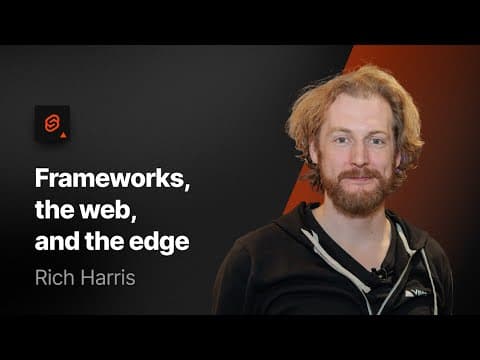
Interviewed: Rich Harris
Hello. How is everyone doing today? My name is Gabby and I am a DX engineer here at Burcell and welcome to Open Source Stories. Today I'm here with Yorgi and you created Publicat. Would you like to introduce yourself and tell everyone what Publicat is? Hey uh welcome everyone and GAPS thank
you for having me here. I'm I built a public ad and it's a platform where you can uh build a website on top of the data set that was originally on some print journal and the whole idea behind it is like that we should use a standard a standardized data structure so we can so we can operate on multiple journals at the same time and I will talk more about it today. >> Yeah, definitely. Um, before we get into that, I want to know a little bit more about you. So, you're currently a grad
student at Stanford, so that's a pretty huge deal. Um, do you want to talk about what you study at Stanford? Uh, what your experience has been like there, and what two different departments that you're currently living between right now? >> Yeah, of course. So, at Stanford, I do Slavic languages and literatures as my PhD degree and I'm in computer science minor. And I feel like Stanford is the best place if you want to work on humanities and doing some computational stuff at the same time. So, uh, yeah,
that's >> what I'm working on. >> I love that. Okay, so everyone, you heard it here first. Go apply to Stanford if you want your PhD, especially in Slavic languages. Um, so love that we're, you know, uh, we're uh, evangelist of Stanford here. Um, but I want to quickly before we get into exactly what public hat is and we do a demo, um, I want to give like a little bit of an explanation for our listeners or watchers here. So, um, and Yorgi, you can kind of hop in and correct me, um,
if anything is, uh, anything I say is incorrect, but, um, when we're talking about library systems and academia, the way that search, uh, or like publications are queried is a lot different than what we would think of um, in the general public when we're doing something on Google. So, for example, if I wanted to know all of the books that Stephen King, right, a a popular author here here in the US has written, I can go type that into Google
and I will get all if not most of his books and it will pop up in a search engine. When you're in academia and you're trying to look up documents and articles and publications, um, each institution or library system will have their own search engine and their own tool. And sometimes if you type in an author's name, um, all of their publications will pop up. Sometimes only a few of them will pop up or sometimes when the search results pop up, they
will be missing information. And as someone who is a researcher, that's very difficult because you want to know all of the work that this specific author has published, right? Um, if you're doing an analysis of Slavic language stories, right? um there's an author, it does matter if they have one publication or 10 across four different journals. Um so is that the correct understanding of how this works in academia and library systems versus maybe a search engine like Google?
>> Yeah. Uh yeah, it absolutely is and thank you for clarifying it for uh for me. Yeah. So like you would have to querying the library system would mean like that you're looking for for like specific subset of books that this library have. It can have all of them. It can have some of them. They're like more unified system as say WorldCat but they can be incomplete especially for I don't know like non-English languages and I know like some Korean author or some Russian author. >> Mhm.