Channel
Interviewed Person
Vercel Community
Vercel
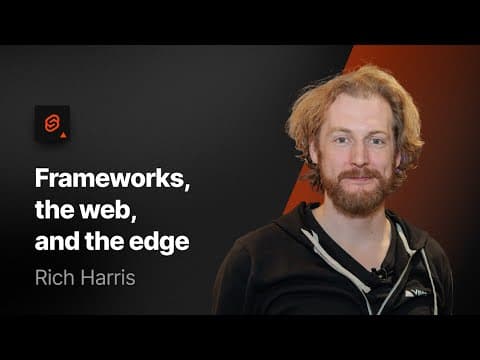
Interviewed: Rich Harris
All right, welcome everyone. Uh, welcome to the future of aentic commerce live session for FCEL. Uh, my name is Boris Basmer hailing from Netherlands. Um, I've been I'm a senior platform architect at Forcell. Uh, and before this I've been doing enterprise commerce for about a decade. Um, I have built tons of websites. Um, I've also built the first Aentic commerce protocol SDK. Um, and I'm here to uh talk to you guys about the future of Dentcommerce and how
to build it. So, I'm going to be talking about three main topics um called Agentic Discovery, agent assistant and aentic commerce. Um, the idea is to move from pages towards agents. Um, so agentic discovery is around optimizing your content for agents rather than just crawlers. Um, agent assistants are internal assistants that are deeply integrated in your platform to help your customers. And last but not least is aentic commerce
where you unlock additional sales channels from specification all the way to implementation. So the idea is that I kind of want to nudge you towards building these uh uh uh uh like assistance and the agentic protocols and not just talk about it. Um I think coding agents combined with your own platform expertise just unlock human ways. um that allow you to to just build uh aentic commerce. So, first off, I want to talk about aic
discovery. And I'm going to start up with a little example around recipe sites. Um you've all seen these before, right? They're all based around long stories, keeping you on the site for as long as you as they possibly can. Um but you need to be factual and concise. I mean, agents aren't here to read your fluff, and you don't need agents to be in your website for a long time. They're just here to extract the content for the visitors. So, try to keep your content factual and concise there.
A second example is for parallel, and they're kind of displaying how a machine looks at your website rather than a user does. The example that you see here is that it's just outputting content. So you shouldn't be wasting tokens. Uh you should focus on on just displaying the content for your agents. Uh they don't need the the CSS, they don't need
the JS, they don't need the presentation, they just need the content. And even with coding agents like a cloth code, they currently accept plain text formats such as text markdown files. You should use that to your advantage. So content negotiation is actually just good old HTTP. Um I have a code example over here using the NexJS proxy. And if you want to like optimize your website for uh for agents, it's actually quite
simple. Um the example over here is a proxy and we look at what the uh agent visiting your website uh is requesting. So modern agents tell you like hey we accept text markdown. So what we do is if it accepts markdown we kind of rewrite your your uh agent visitor towards moving to uh the markdown version of a page and it could look something like this where um once you visit the page
you get the product and then you take that product and you change that into markdown instead of uh like the complete HTML page. So you get something like this. Um you get a product detail page where it just shows you the product title. It shows you what it does. It show concise and it's not wasting any